Bearded Dragon Care & Education
Habitat Setup
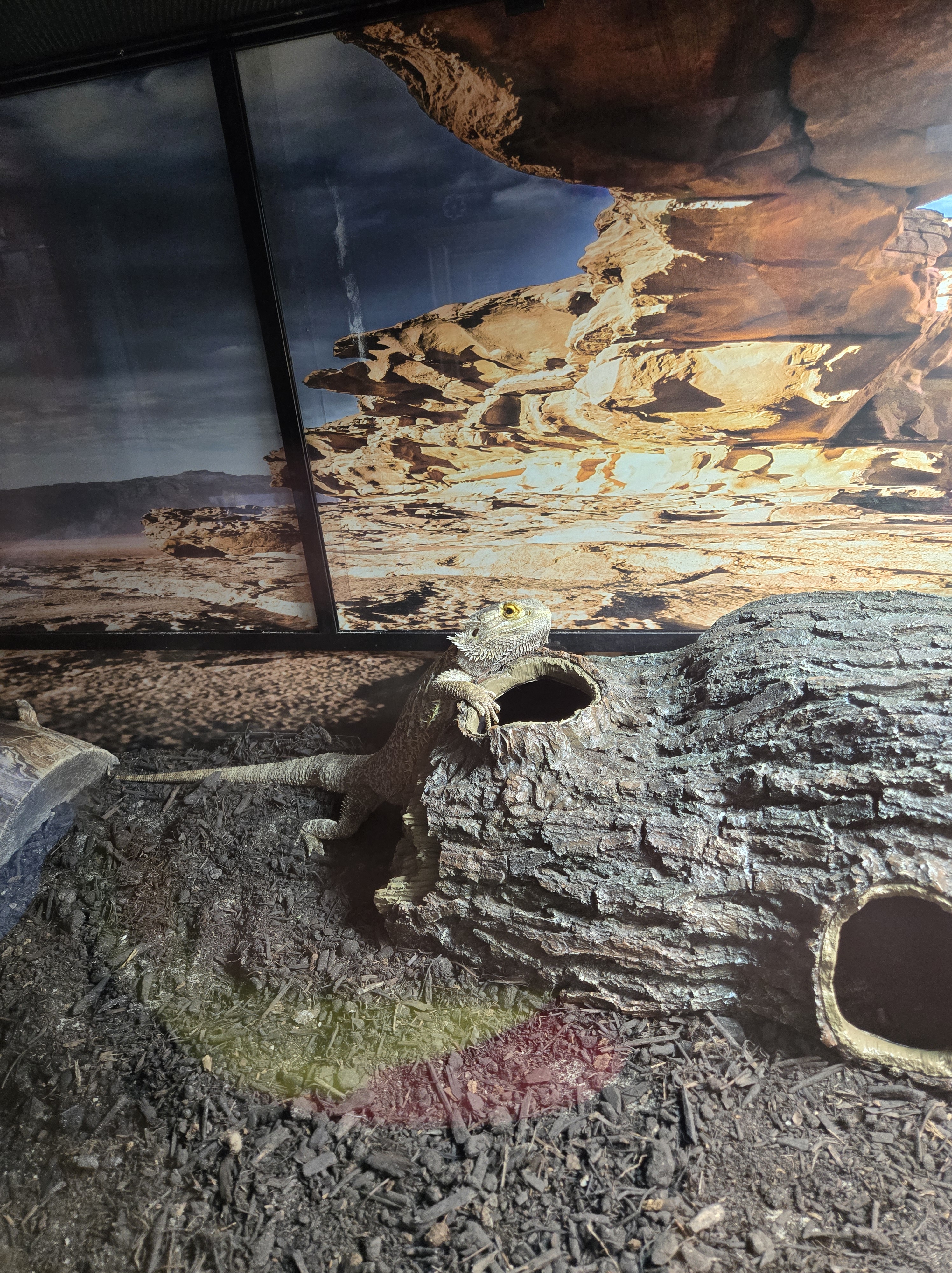
Bearded dragons require a spacious enclosure that allows them to move, explore, and thermoregulate. The habitat should include a basking area, hiding places, climbing opportunities, and appropriate substrate. Providing a well-designed enclosure encourages natural behaviors and promotes overall health.
Handling
Bearded dragons are generally tolerant of handling when approached calmly and gently. New dragons should be given time to adjust to their environment before being handled regularly. Supporting their body properly and handling them with care helps build trust and reduce stress. It is important to wash your hands after handling your beardie.
Heating and UVB Lighting
Proper heating and UVB lighting are among the most important aspects of bearded dragon care. A basking area should be provided so the dragon can warm itself and regulate its body temperature. UVB lighting is essential because it helps bearded dragons process calcium and maintain healthy bones.
Both heat and UVB bulbs should be checked regularly and replaced according to manufacturer recommendations.
Health and Maintenance
Regular enclosure cleaning, proper temperatures, UVB lighting, and a balanced diet are essential for maintaining a healthy bearded dragon. Owners should monitor appetite, activity level, shedding, and overall appearance for signs of illness.
Routine veterinary care with a reptile-experienced veterinarian is recommended.
Feeding
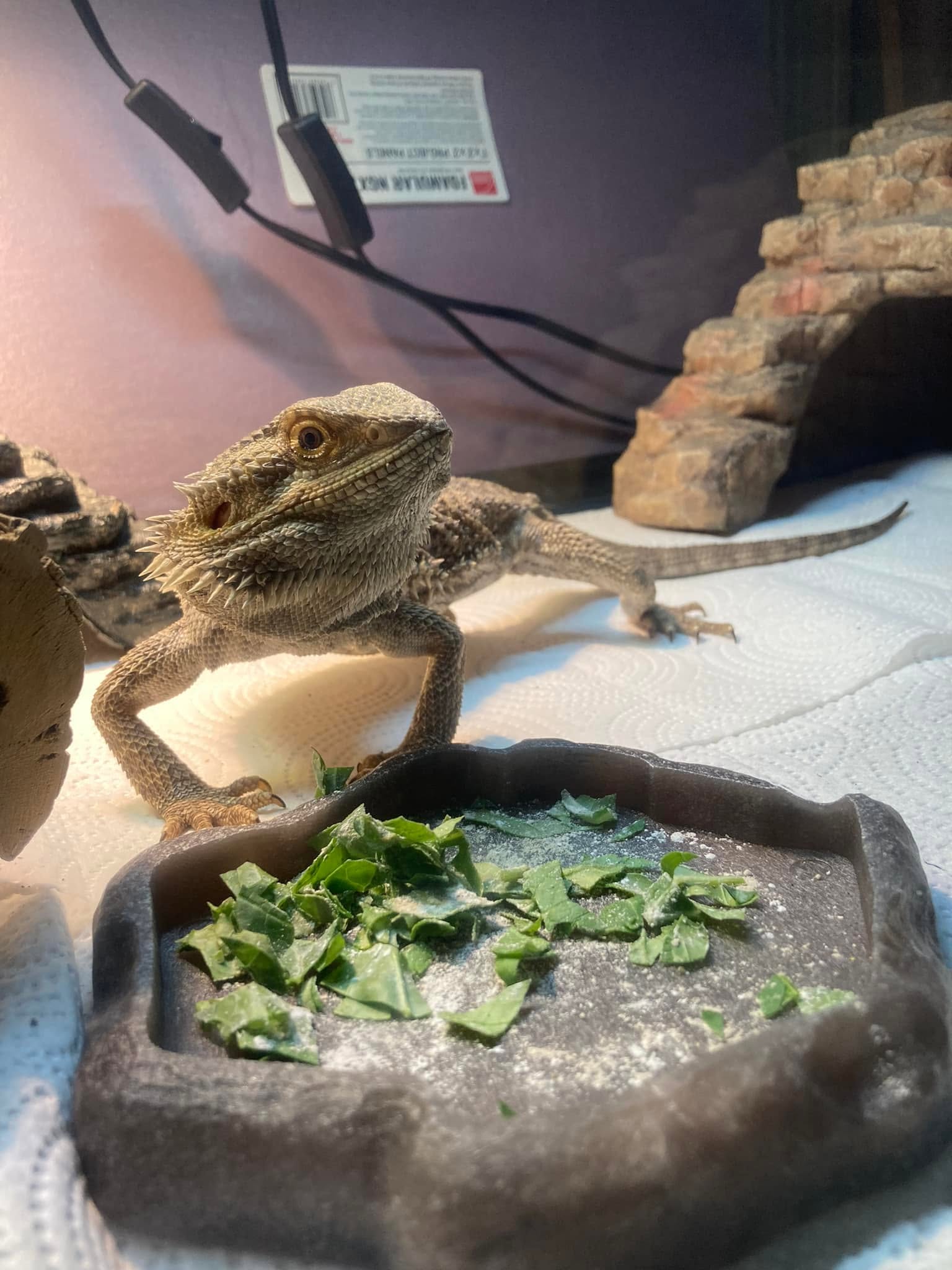
Bearded dragons are omnivores, meaning they eat both insects and plant matter. Younger dragons typically eat more insects to support growth, while adults consume a larger percentage of vegetables and greens.
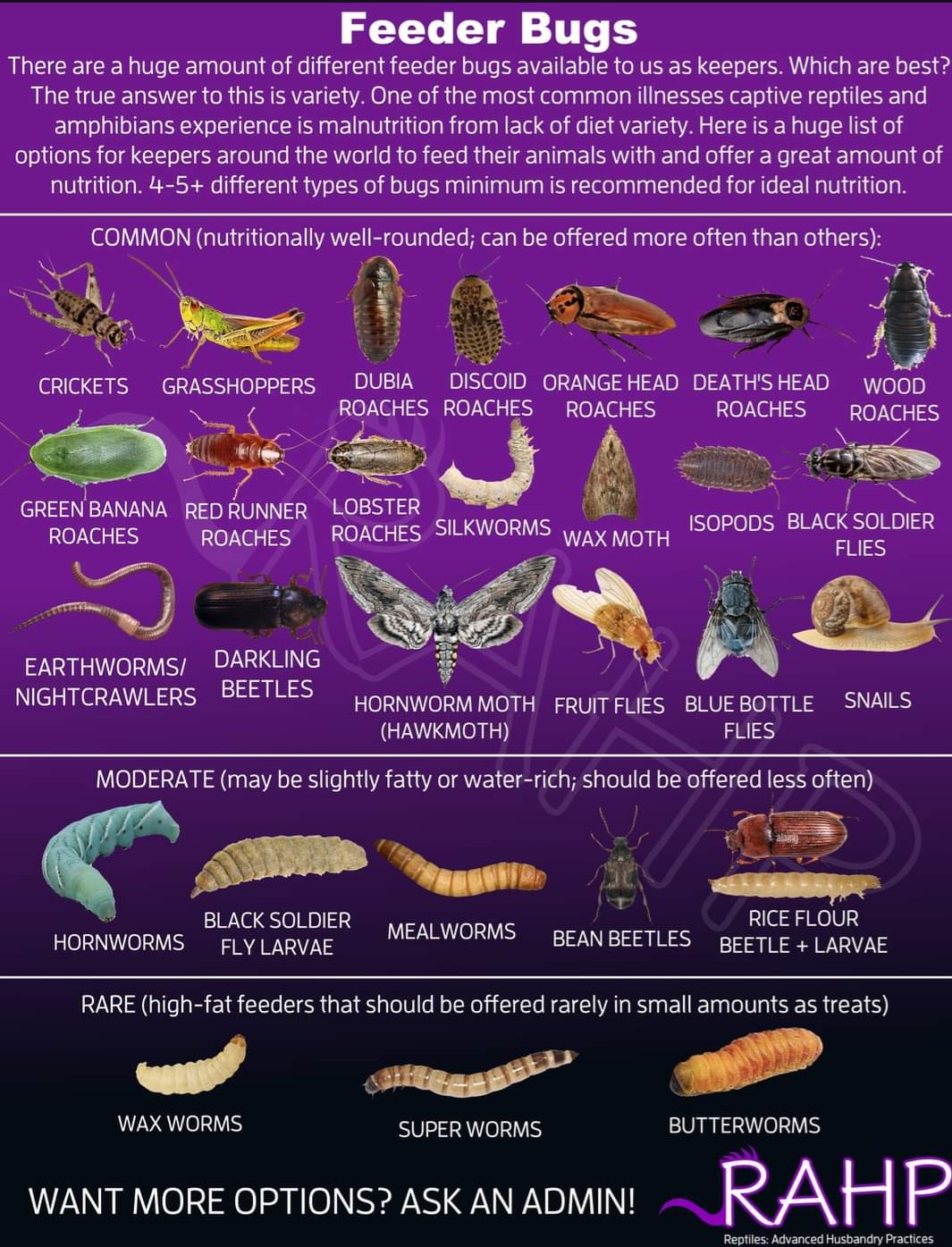
Common feeder insects include crickets, dubia roaches, and mealworms. Safe vegetables and greens can include collard greens, mustard greens, dandelion greens, and squash. Fresh water should always be available.

Caution: Bearded Dragons and Solitary Housing
Bearded dragon are often described as “generally solitary” in captivity, but this comes with important nuance. While they may tolerate brief visual contact with other dragons in some situations, they are not social animals and do not form bonds. In most captive setups, housing them together is discouraged.
Co-housing can lead to serious problems such as dominance behavior, stress, food competition, and injuries, especially when one dragon is larger or more assertive. Even same-sized individuals can develop subtle aggression that isn’t always obvious until health declines or injuries occur.
For responsible care, the safest approach is to house bearded dragons individually with their own enclosure, heat sources, basking areas, and feeding stations. This ensures each dragon can eat properly, thermoregulate, and live without unnecessary stress or competition.
Welcome to Bearded Dragon Advancing Care & Keepers. This group is here to provide the most up-to-date care & husbandry based on scientific data and research. Join us if you’re interested in learning the best keeping practices for your bearded dragons.
Bearded Dragon Advancing Care & Keepers

 Mini Zoo Life