Leopard Geckos Care & Education
Habitat Setup
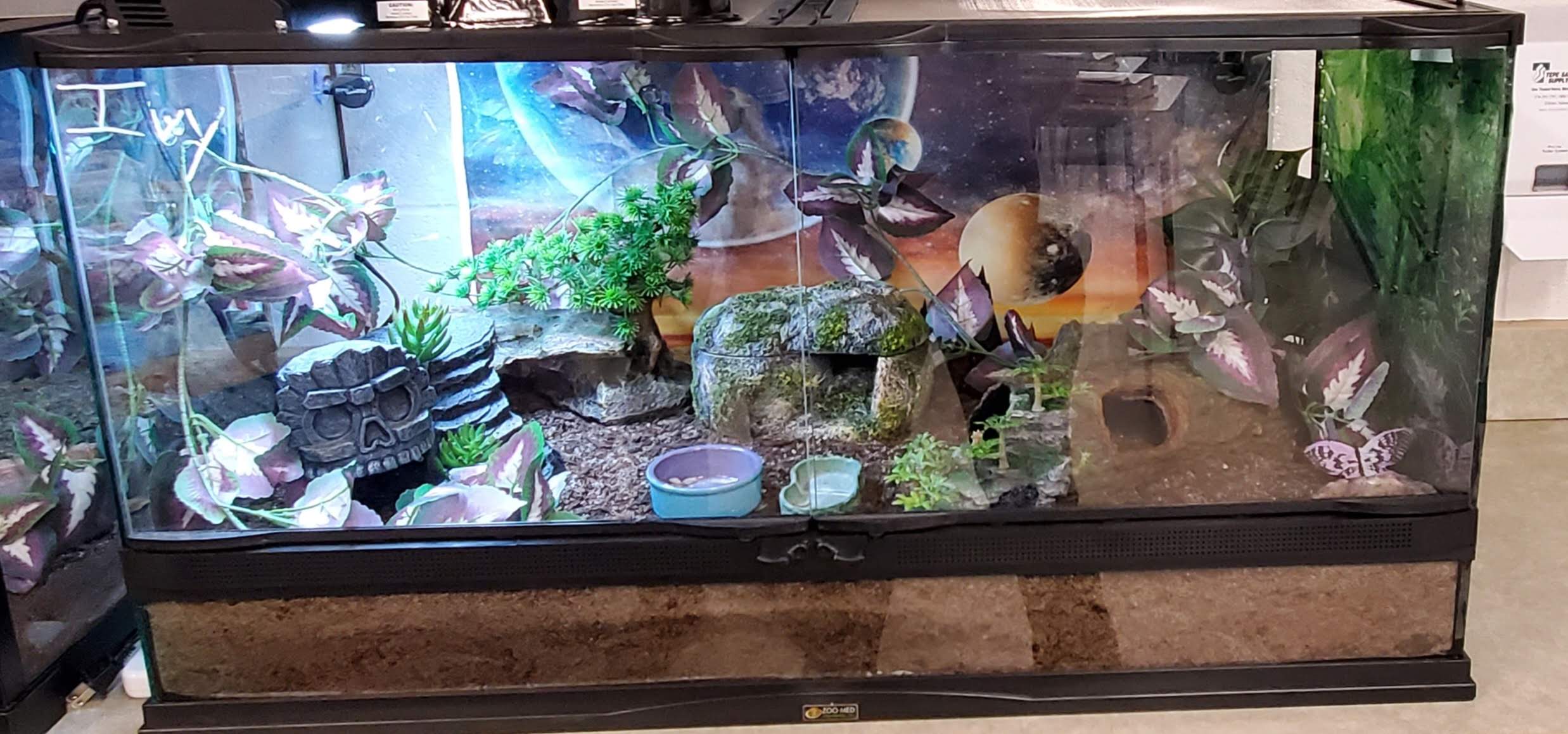
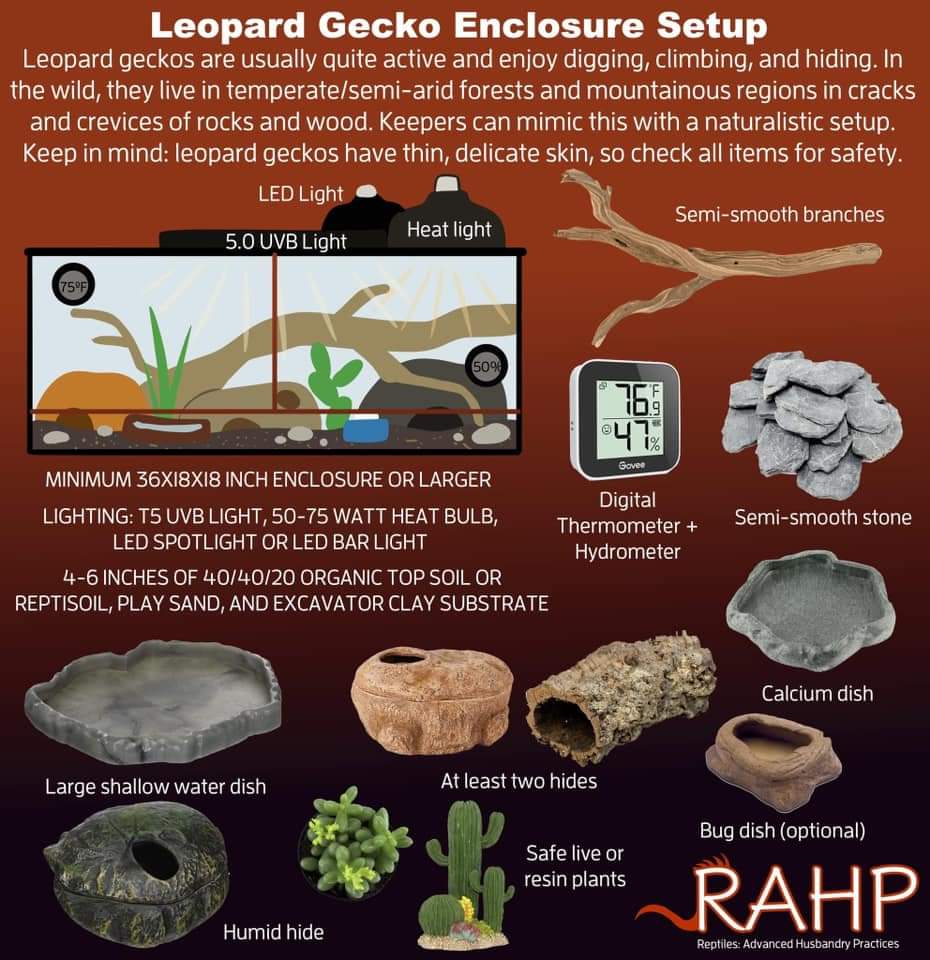
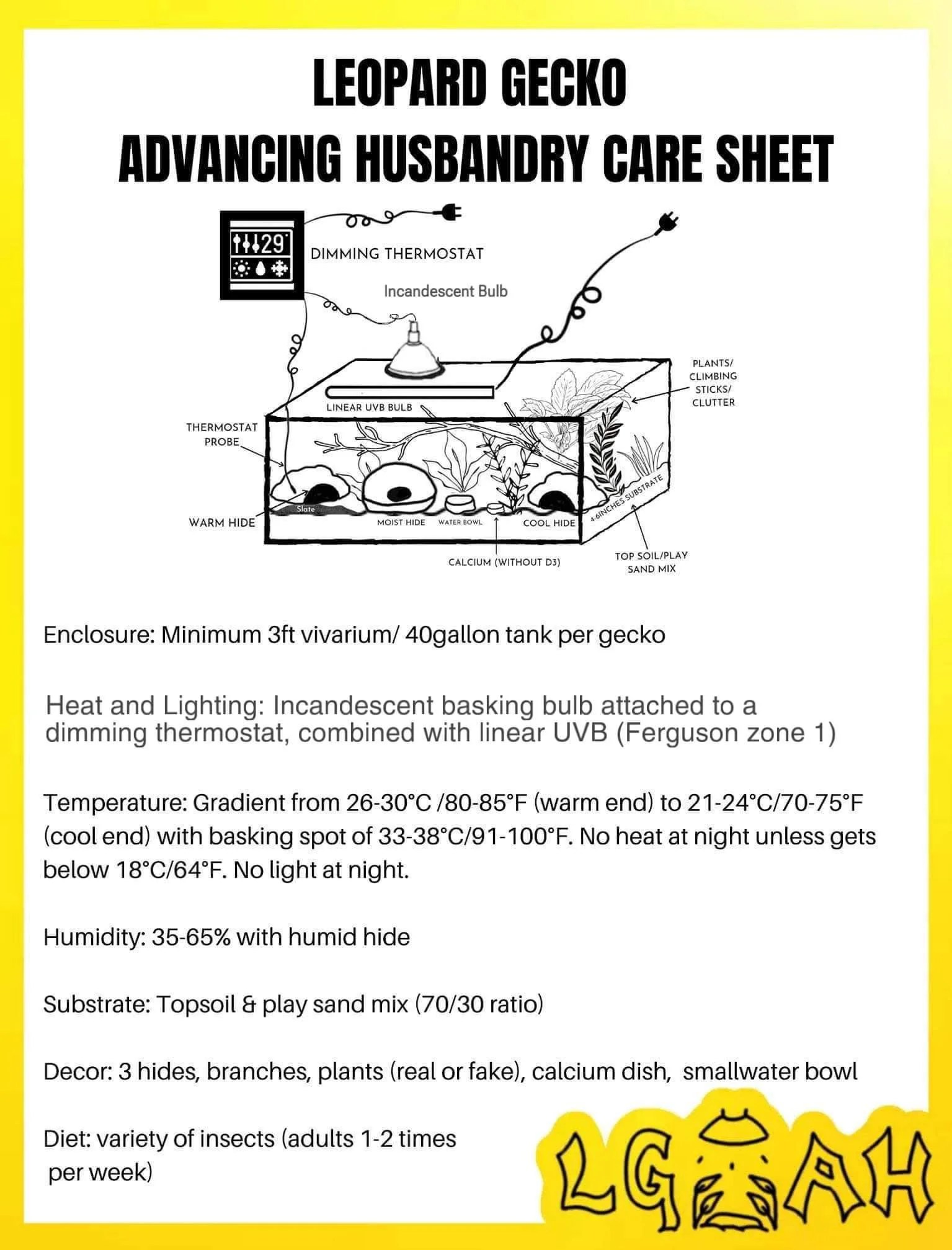
Leopard geckos need a secure enclosure with proper heating, hiding places, and substrate. Their habitat should include at least three hides: a warm hide, a cool hide, and a humid hide to assist with shedding. Providing a temperature gradient allows the gecko to regulate its body temperature by moving between warmer and cooler areas.
Feeding
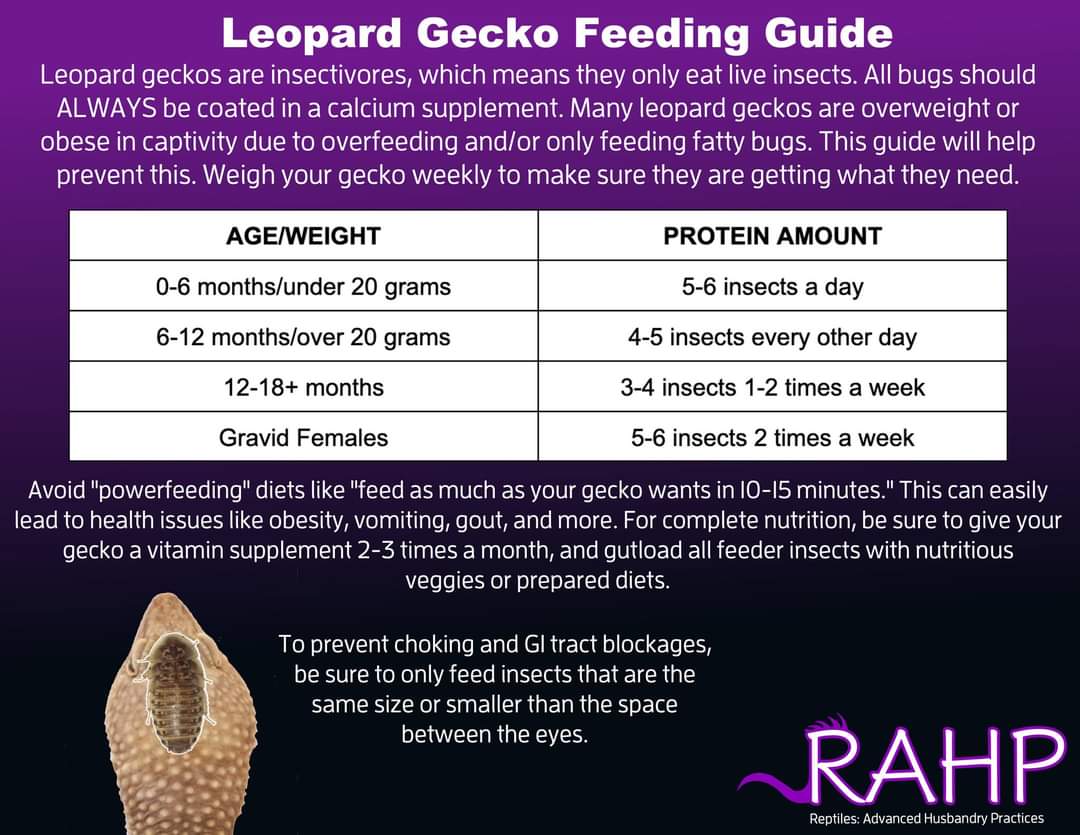
Leopard geckos are insectivores, meaning they eat insects. Common feeder insects include crickets, mealworms, dubia roaches, and other appropriately sized insects. Insects should be gut-loaded and dusted with calcium and vitamin supplements to help maintain good health.
Heating and Lighting
Because leopard geckos are reptiles, they require an external heat source to regulate their body temperature. A warm side and cool side should be maintained within the enclosure. While leopard geckos do not require intense lighting like some reptiles, providing a proper day and night cycle helps support natural behaviors.
Shedding
Leopard geckos shed their skin regularly as they grow. A humid hide helps loosen old skin and makes shedding easier. Owners should monitor shedding to ensure no skin becomes stuck around the toes, tail, or eyes.
Caution: Leopard Geckos Are Solitary in Captivity
Leopard gecko are naturally solitary animals and should generally be housed alone in captivity. Unlike some reptiles that can live in groups, leopard geckos do not form social bonds and may become stressed, competitive, or aggressive when kept together—especially males. Even females, when housed together, can experience issues such as bullying, food competition, and uneven access to heat or hiding spaces.
Co-housing can also lead to serious health risks, including tail biting, injuries during feeding, and chronic stress that weakens their immune system. For most keepers, the safest and most responsible setup is a single gecko per enclosure, with proper space, hides, and resources designed specifically for that individual.
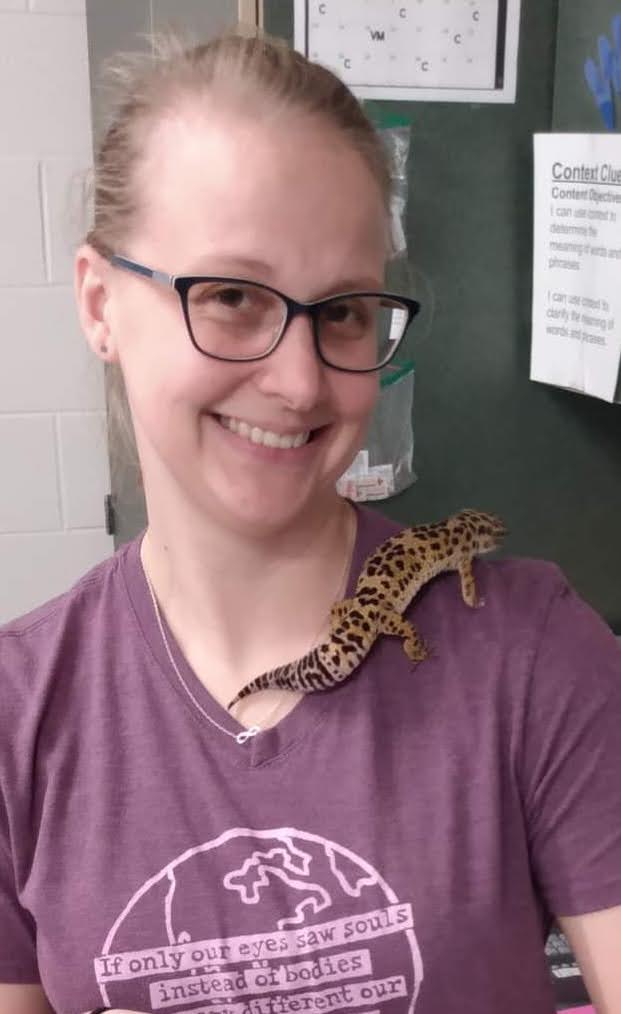
My Experience with Rango
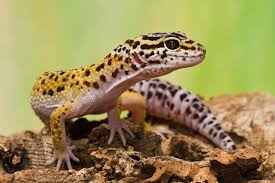
My boy Rango did not like being handled when I first got him. He was nervous around people and would often try to bite when anyone attempted to pick him up. With time, patience, and consistent care, I was able to earn his trust and help him become much more comfortable with handling.
I also corrected some habitat choices that had been made by previous owners. Rango originally lived in a 10-gallon tank, which did not provide enough space for proper enrichment and exploration. He now lives in a 40-gallon enclosure that gives him room to move around, explore, and display more natural behaviors.
One of the biggest improvements has been his diet. Rango now eats live insects, which he enjoys hunting. Watching him stalk his prey is one of my favorite parts of caring for him. Right before he strikes, his tail begins to wave back and forth, almost like a rattlesnake. This behavior helps him focus on his target and is a fascinating example of a leopard gecko’s natural hunting instincts.
Seeing Rango grow more confident and comfortable over time has been very rewarding. His transformation shows how proper housing, nutrition, and patient handling can make a significant difference in a reptile’s quality of life.
Leopard Gecko- Advancing Husbandry
 Mini Zoo Life